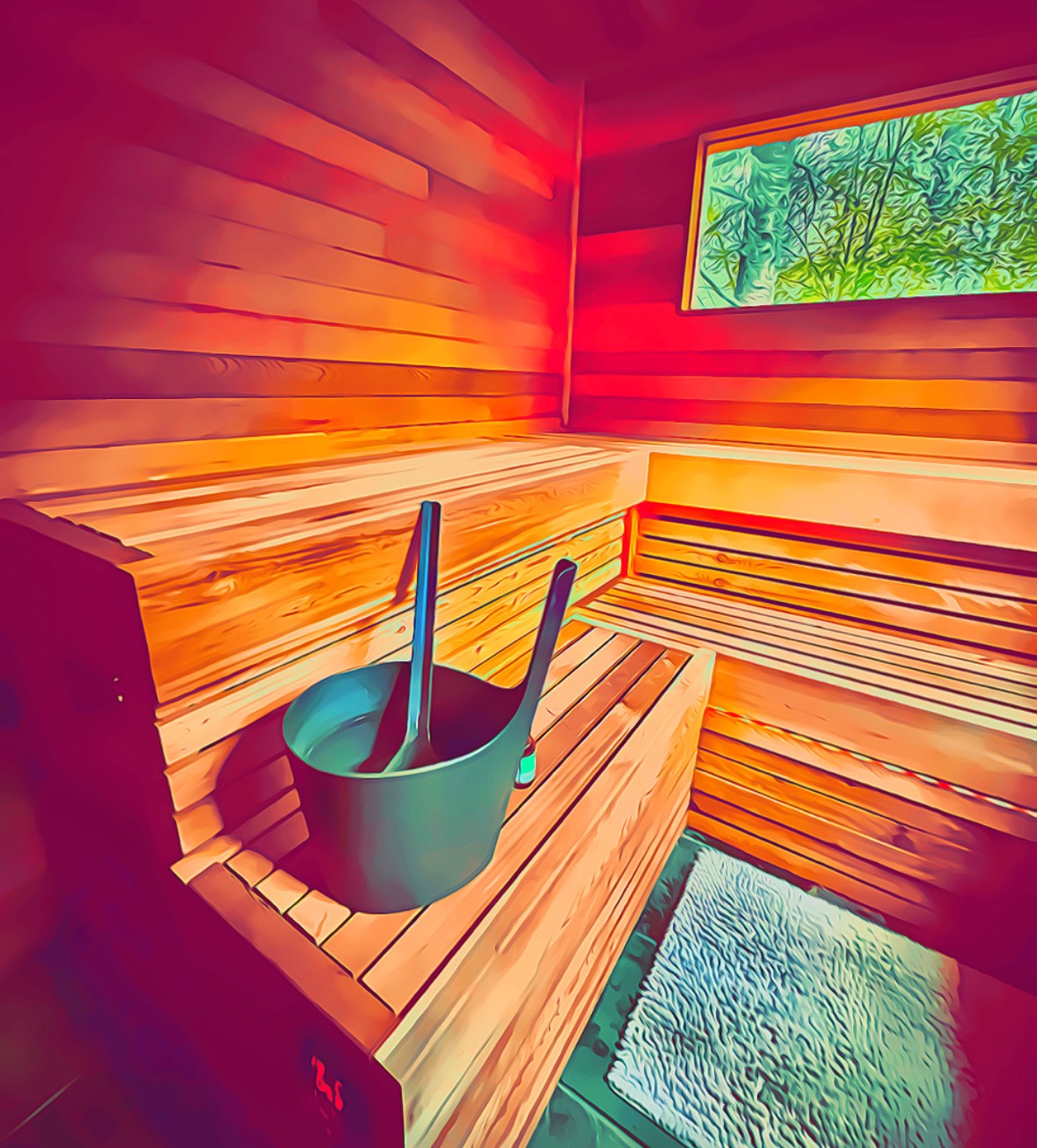
Sauna Build #1
I’ve loved a good sauna ever since my 90’s days as a kayak guide in Tofino, BC. The old Vargas Island Inn had a great one one right on the edge of the forest, steps away from the beach. It’s heavy iron stove was surrounded by a chicken-wire fence that held in a cubic meter of river stones, and we’d pack that thing full of wood and let it rage til the stovepipe glowed red. We were liberal with the water (or beer) on the stones, and our gang of naked guides would whoop and holler as we ran outside to plunge into the ocean and then ran back to the heat. It was a good time. It was a rustic, barbarian sauna, and it was awesome.
Fast-forward some years and I had a broken-down back-deck hot-tub to deal with. It was in a recessed area of the deck and it couldn’t be ignored. I’d been told by the hot-tub company that it wasn’t worth repairing anymore, which was fine because I was tired of the constant chemistry set juggle of chemicals that are required to keep your skin intact. The space the hot-tub was in would be perfect for a sauna I figured, so off I went with my perpetual can-do attitude and a few tools. A reciprocating saw made easy work of the old hot-tub, and the internet was my resource for the fundamentals of sauna design. Chief among the internet experts on all things sauna is a blog known as “Trumpkin’s Notes” – no relation to that other guy with a similar name. Trumpkin’s blog has compiled the fundamentals of Finnish sauna design, and for a DIYer like me it was invaluable. My first sauna wasn’t perfect, but it was pretty good. It got hot, I had a cold shower outside, and everyone loved it. When it came time to sell that house, I have a feeling that the sauna helped cinch the deal.
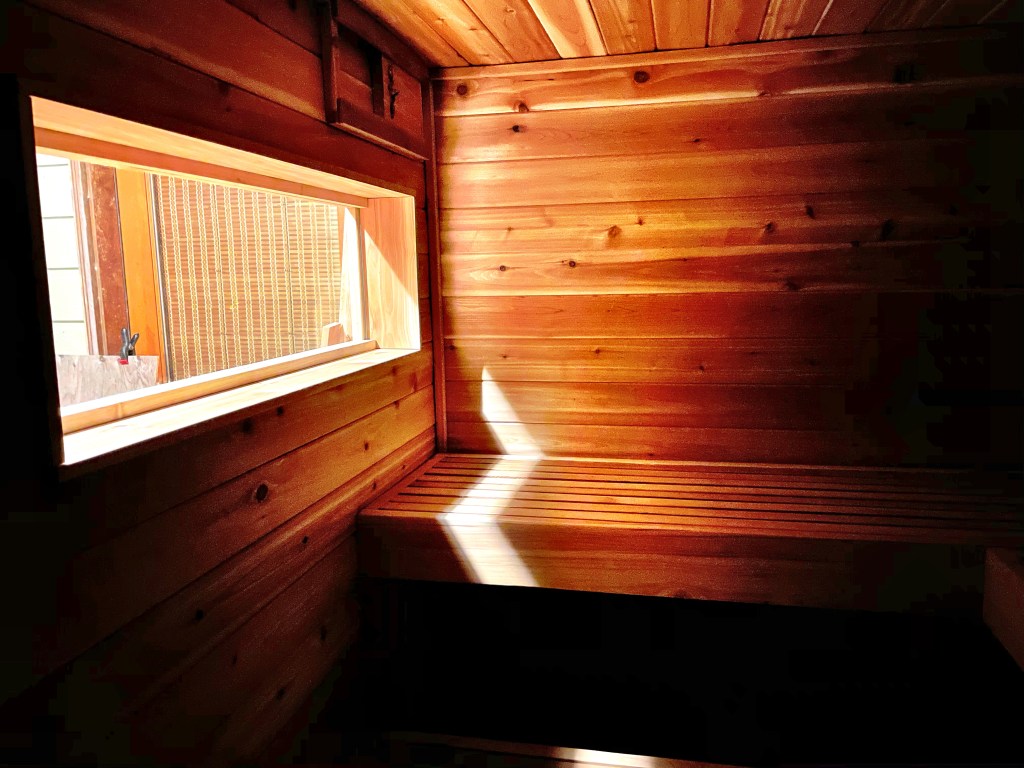


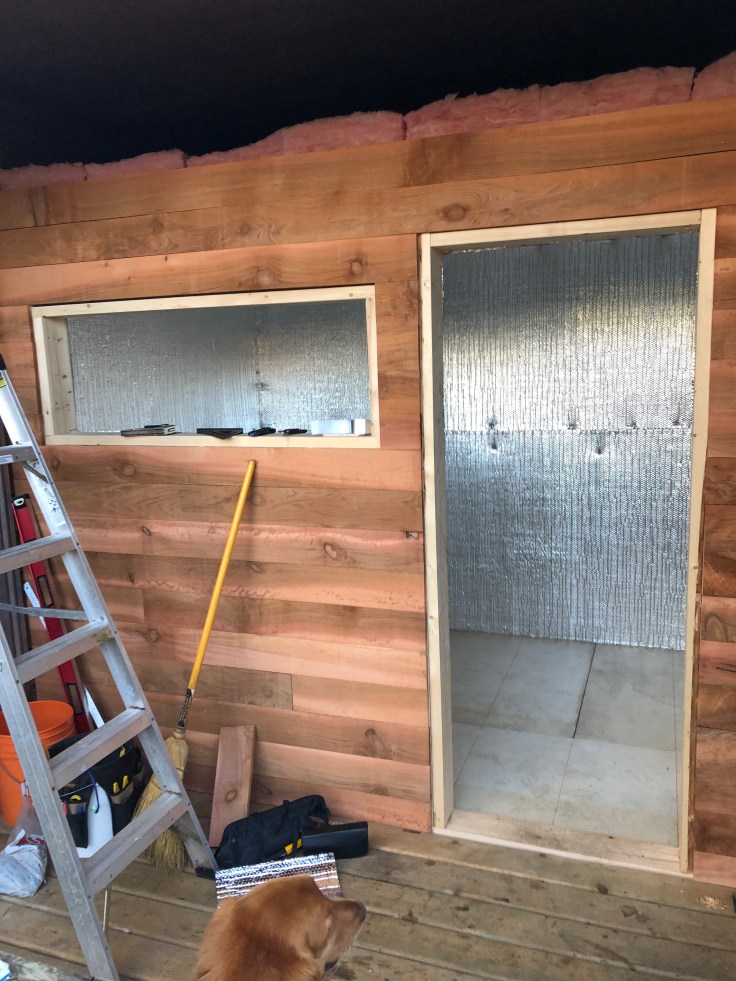
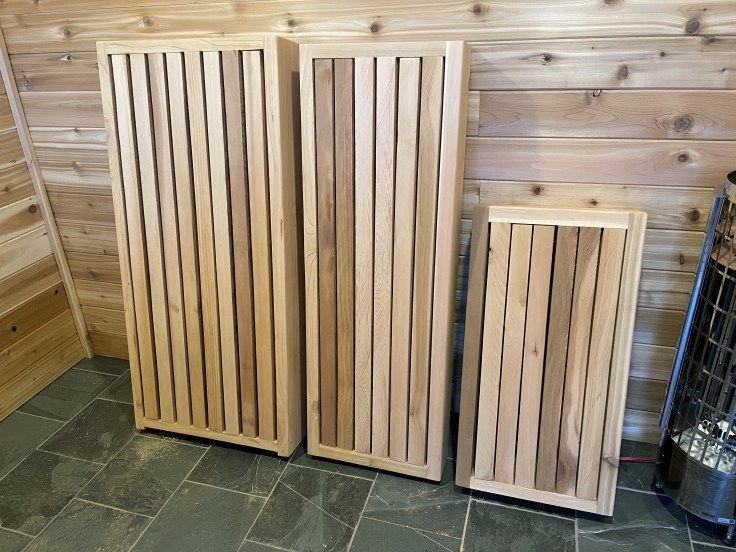
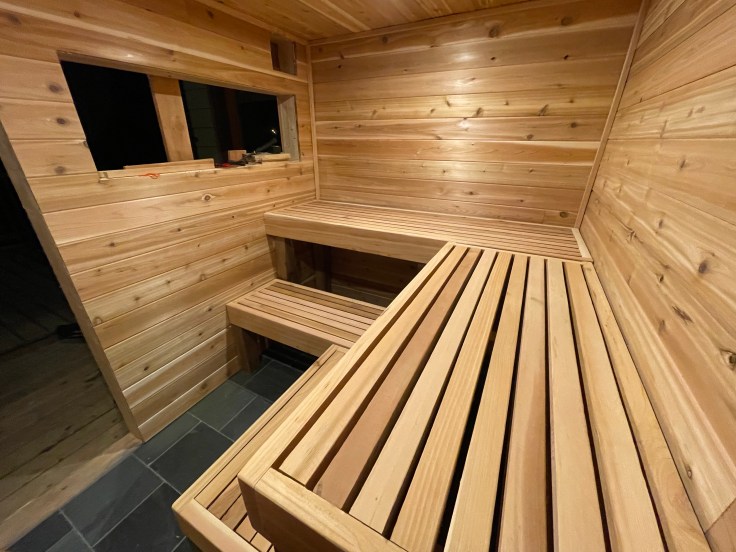
The window I used was tempered glass, which took forever to get because tempered glass is made to measure, and the first order was lost when the truck crashed. It was frameless, and I just put it in with 1×1 strips of matching cedar. The heater was electric, and just used the same circuit that the hot-tub had been on, though I did have to replace the worn old GFI breaker. Strangely, the only place to get good sauna heaters in Canada seems to be at sauna.ca out in Quebec, so shipping wasn’t cheap. They were awesome to deal with though, and real people even answered the phone when I called.
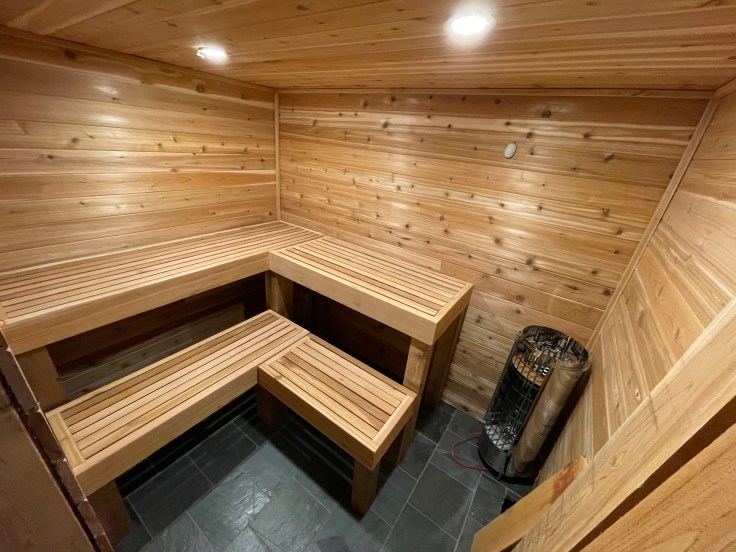
If I was to go back and build this sauna over again, I’d do several things differently. I had extra ceiling height available that I didn’t use. If I had gone higher, I’d have had more “feet above the stones” as the Finns say. As it was, ones feet can be a little to far down in the cold zone. I had read somewhere else that “saunas should have 7-foot ceilings” so that’s what I was aiming at. This information is incorrect really. A sauna could have that ceiling height, sure, but there are other factors to consider, like air circulation and air layer stratification. I also would not have put in LED pot-lights in the ceiling. They got quite hot to the touch, and they were too bright anyways, even on a dimmer. The light from outside the sauna was sufficient, and if I really needed lights inside I think an low LED strip-light would do the trick. I didn’t put a drain in this sauna, but there was a vent-hole under the Harvia Cylindro 8kw/h heater through which water could drain to the ground. In future saunas I may consider a drain, I know the Finns would approve.
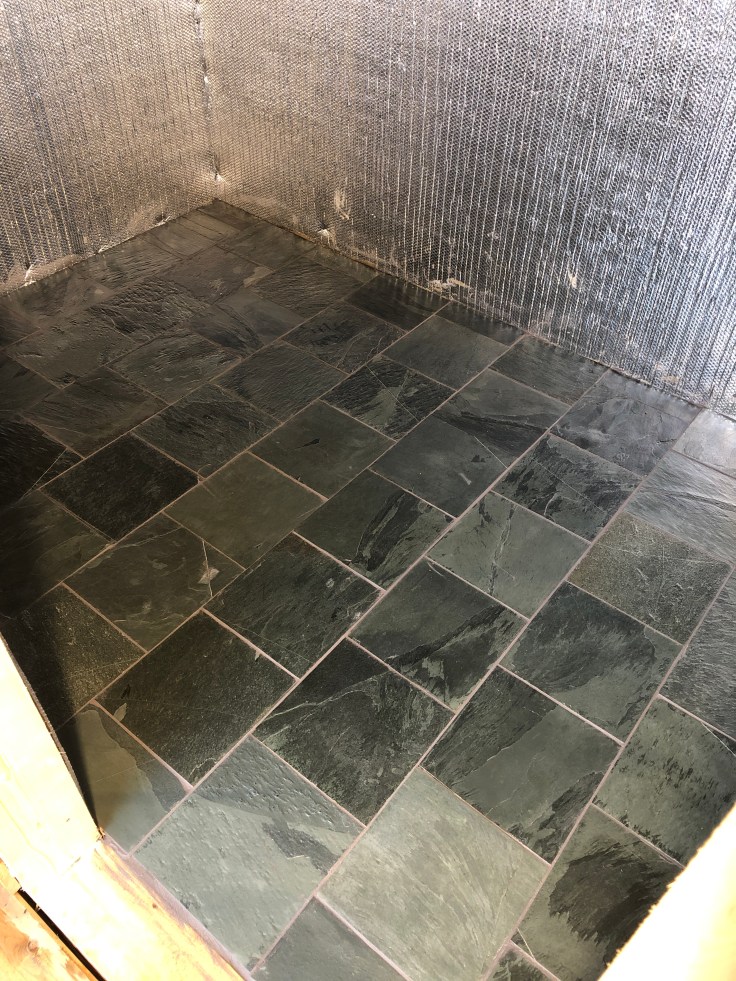
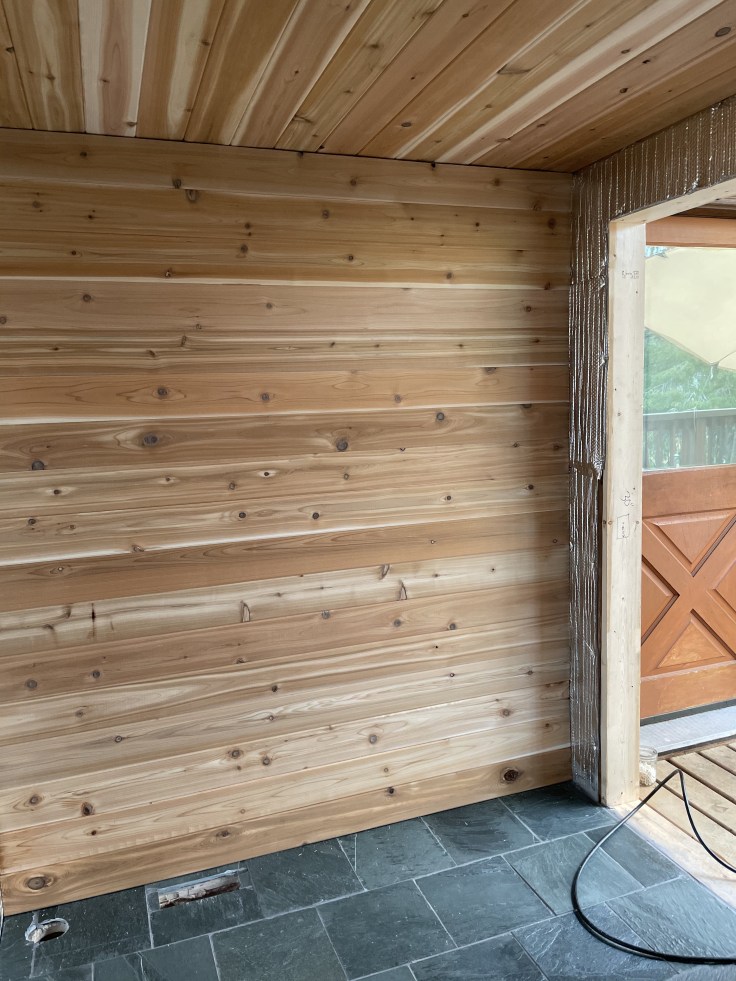
The other thing I wasn’t completely happy with was the foil layer under the T&G cedar. The only foil layer I could find at the time was a foil bubble-wrap. It was fine I suppose, I did a thorough job of taping all the seams and staple holes. However, when the sauna was on, I could hear a subtle crinkling sound, which was the bubbles in the foil no doubt expanding and contracting with temperature fluctuations. When I moved to the US and built my second sauna, I was conveniently close to Cedarbrook Sauna and I was able to get some proper sauna foil.
Overall, I’m still happy with this sauna, and I hope it’s still working great for the new owners of the house. The electrical was all done by professionals, so there’s no concerns there. It’s well ventilated, under cover, and all the wood is cedar, so it’s really well suited to the west coast of BC. The proprietors of the Vargas Island Inn have passed away now, but I’d like to think that they’d probably enjoy some good löyly if they were around.
Are you considering building your own sauna? If you have questions about this sauna build, leave them in the comments!
If you like my writing you can Buy Me A Coffee!
Discover more from Douglas Writes...
Subscribe to get the latest posts sent to your email.
 Douglas Writes...
Leave a comment